
InfoEmu Team
Code-Driven Documentation
The Documentation Problem
Documentation should keep pace with code, however, we usually write it, promptly forget about it, and six months later it's a misleading relic. At InfoEmu, we've been tackling this challenge head-on with a pattern we're calling "code-driven documentation."
Solving Docs Decay
Our approach is simple yet powerful:
- Document in the code itself - Not in separate markdown files
- Automate extraction - Pull examples directly from working code
- Continuous integration - Update docs automatically when code changes
This ensures documentation stays accurate and removes the separate maintenance burden.
How It Works
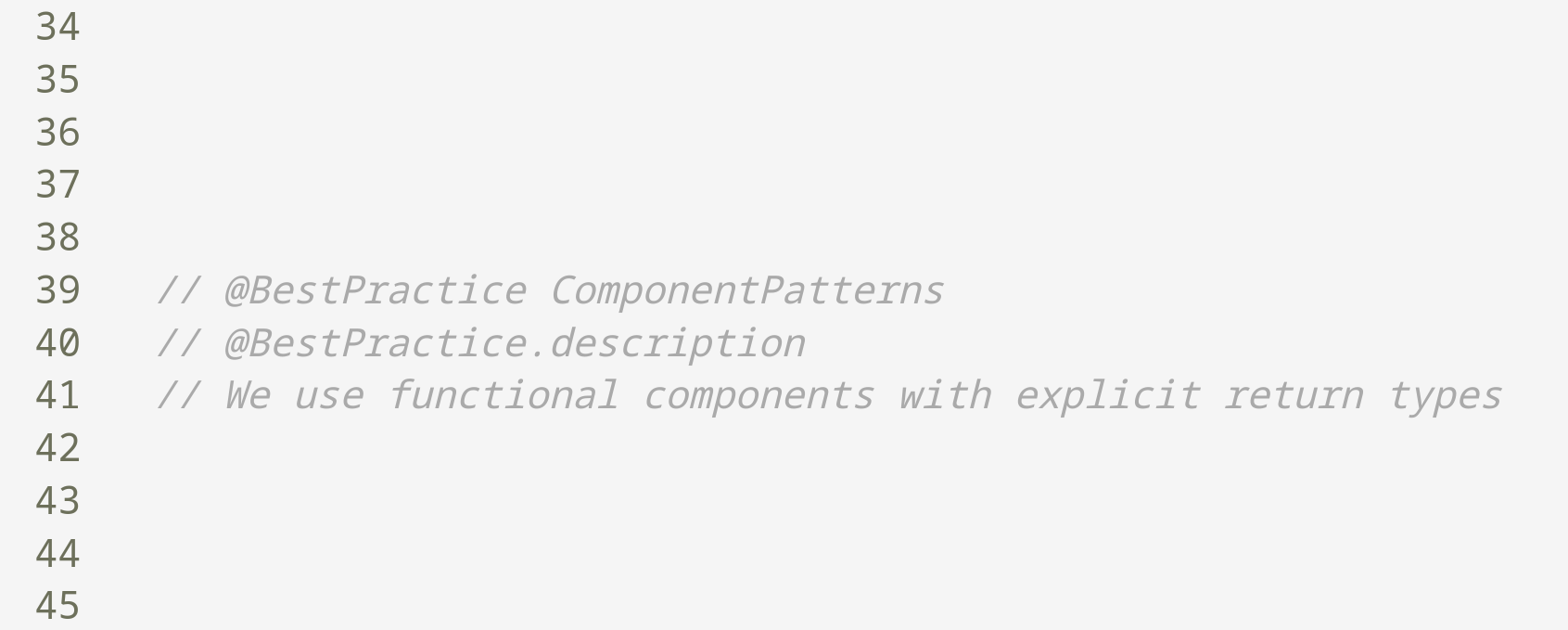
We use special code annotations to mark exemplary patterns. Here's a simplified version:
// @BestPractice ComponentPatterns
// @BestPractice.description
// We use functional components with explicit return types
function ProductCard({ product }: ProductProps): JSX.Element {
  return (
    <div className="p-4 rounded shadow">
      <h3>{product.name}</h3>
      <p>{product.description}</p>
    </div>
  );
}
// @BestPractice.end
Our custom tool scans the codebase, extracts these patterns, and generates documentation automatically. The entire process happens during CI/CD, so docs update whenever the codebase changes.
Real-World Implementation
We've built this approach into our development workflow with three key components:
- Annotation standard - Consistent way to mark best practices in code
- Extraction tool - Node.js utility that pulls examples from code
- CI integration - Automatic documentation updates on deploy
When a developer changes a pattern that's been documented, the docs update automatically. No more stale documentation!
The Impact
This approach has transformed how we maintain knowledge:
- Higher quality examples - Real, working code instead of contrived snippets
- Documentation that evolves - Examples stay current with our latest patterns
- Reduced maintenance burden - No separate documentation updates required
- Streamlined onboarding - New developers see actual production patterns
Try It Yourself Today
Close.com open-sourced their documentation generator. It works with JavaScript and TypeScript codebases and is simple to integrate into your projects:
npm install @closeio/best-practices-documentation
The tool provides a CLI for generating docs and APIs for custom integration. Check out the full documentation to get started.
This is a great solution for small teams or projects with a small codebase and works for free, now.
Our Future Direction
We're will be integrating this approach in our platform as a feature. We're also looking into:
- Adding support more languages beyond JS/TS
- Adding visual diff reviews when patterns change
- Creating interactive documentation with live code examples