InfoEmu Team
Building InfoEmu.com
Building InfoEmu.com
Welcome to the InfoEmu blog! As is customary with first posts, we want to share how we built this website and the technology stack behind it.
The Tech Stack
Our website is built with a modern tech stack designed for performance, developer experience, and scalability:
- Next.js 14: We chose Next.js for its powerful App Router, server components, and excellent static site generation capabilities.
- TypeScript: All code is written in TypeScript for type safety and developer productivity.
- Tailwind CSS v4: We're using the latest version of Tailwind CSS for rapid, utility-first styling.
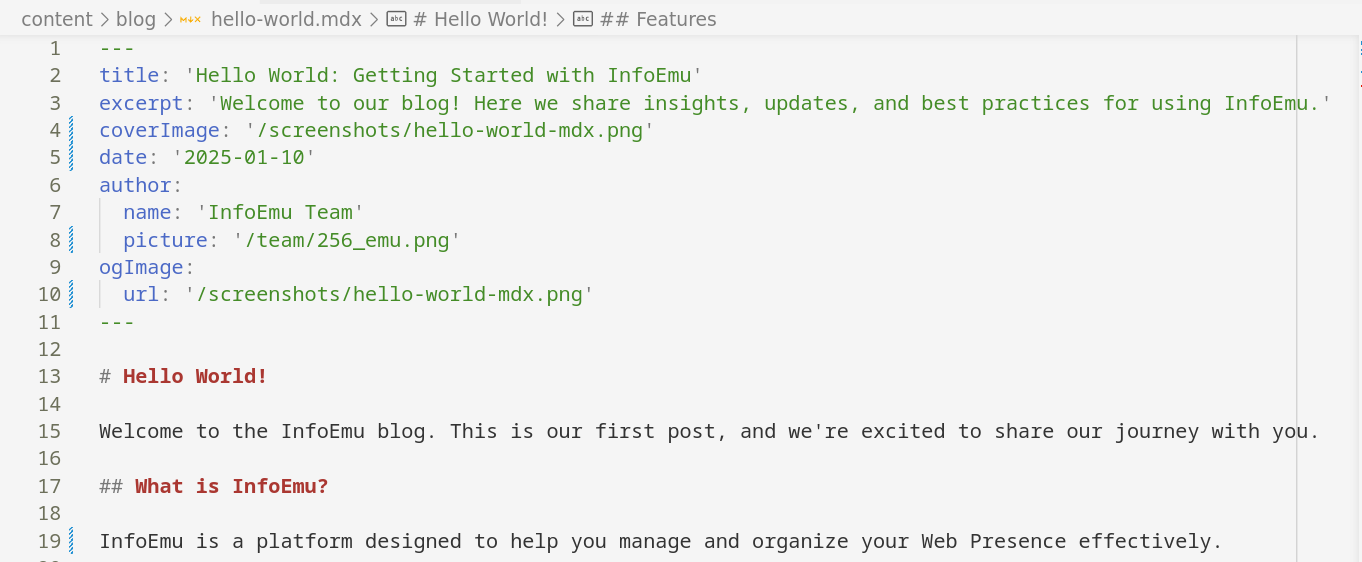
- MDX: For our blog and documentation, allowing us to use React components within Markdown.
- Docker: Containerized development and production environments for consistency.
Of course, it is hosted using InfoEmu docker image deployment and consumes data from InfoEmu.com API.
Architecture Highlights
App Router and Server Components
We've fully embraced Next.js App Router architecture, which allows us to:
- Create nested layouts that share UI elements across pages
- Load different parts of a page in parallel
- Keep sensitive data and logic on the server
- Generate static pages at build time for optimal performance
MDX Content Management
Our blog posts and documentation are written in MDX, which provides several benefits:
- Combine Markdown simplicity with React components
- Create interactive content with embedded components
- Streamline content creation workflows
- Use a consistent design system across all content
Here's how we process our MDX content:
// We use next-mdx-remote to render MDX content with frontmatter
const mdxSource = await serialize(content, {
  parseFrontmatter: true,
})
Monitoring and Analytics
We've integrated industry-standard tools for monitoring and analytics:
- Sentry: For error tracking and performance monitoring
- PostHog: For privacy-friendly analytics and user insights
These integrations help us understand how our site is performing and how users are interacting with it.
Deployment and Infrastructure
We've have automatic deployment pipeline provided by InfoEmu platform itself.
- We use Multi-stage builds for lean production images (~110MB)
- Next.js Output Standalone outputs only the necessary node_modules files
- Environment variable for configuration
Performance Optimizations
Performance was a key focus during development:
- Static Site Generation: Core pages are generated at build time
- Image Optimization: Using Next.js Image component for responsive, optimized images
- Code Splitting: Automatic code splitting for smaller bundle sizes
- Incremental Static Regeneration: For content that needs periodic updates
What's Next?
We're continuously improving the InfoEmu website with new features and optimizations. Stay tuned for more updates, tutorials, and insights into our development process!
If you're interested in the technologies we've used, check out the official documentation: